


 Go back

For more than two decades, the Marine Conservation Society Seychelles (MCSS) has been at the forefront of sea turtle conservation, working to protect one of the nation’s most iconic and threatened species. Today, this long‑term commitment is culminating in a major national milestone with the establishment of Seasonal Protected Areas (SPAs) across key nesting beaches in the south of Mahé. These new protected zones, active during the peak nesting and hatching months, represent one of the most targeted, data driven conservation measures ever implemented for Seychelles’ marine megafauna.
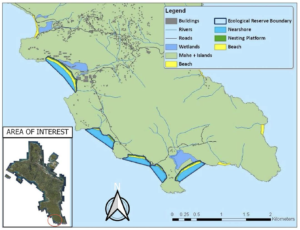
Seasonal Protected Areas in South Seychelles
The initiative builds on MCSS’s extensive monitoring programme, which has generated one of the longest continuous datasets on hawksbill (Eretmochelys imbricata) and green turtles (Chelonia mydas) in the Western Indian Ocean. Since the early 2000s, MCSS teams have conducted daily patrols, tagging, nest monitoring, and threat assessments across multiple beaches. This long‑term dataset has been critical in identifying the beaches that consistently support high nesting activity and those where turtles face the greatest pressures.
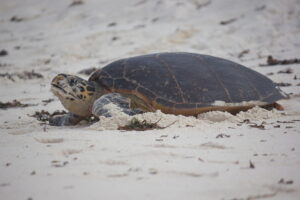
Hawksbill turtle (Eretmochelys imbricata)
Seasonal Protected Areas: a Deliberate Approach
Using this evidence base, MCSS worked closely with the Ministry of Environment, local authorities, and private landowners to map priority nesting habitats of the proposed SPAs. These areas are designed to reduce disturbance during the most sensitive periods of the reproductive cycle, typically October to April for critically endangered hawksbills turtles. Within these zones, certain activities will be restricted or prohibited during the nesting season.
The approach is deliberately seasonal rather than permanent, balancing ecological needs with community and tourism use. “The goal is not to close beaches,” explains MCSS. “It’s to ensure that the beaches remain viable nesting habitats for generations to come. Seasonal protection allows turtles the quiet, and safe conditions they need, while still allowing communities and visitors to enjoy these spaces.”
From Local Leadership to Global Partnership
A key strength of the project has been its collaborative nature. MCSS facilitated consultations with district administrators, hotel operators, and local residents to ensure that the protected areas are both scientifically justified and socially workable. Community engagement has been vital, with MCSS delivering awareness sessions, school programmes, and volunteer opportunities to build local stewardship. Regular beach rehabilitation and cleanup activities have included stakeholders with the aim of building public engagement. Furthermore, once operational the SPAs will be administered through a co-management agreement between MCSS and the Ministry of Environment, Climate, Energy and Natural Resources.
The next phase, effective management of the SPAs, is being significantly strengthened thanks to the High Ambition Coalition for Nature and People and through funding from the Principality of Monaco. This support is enabling MCSS to expand its monitoring capacity, train additional community rangers, and develop standardised protocols for enforcement and reporting. With this backing, MCSS can ensure that the SPAs are not only designated on paper but actively managed and monitored.
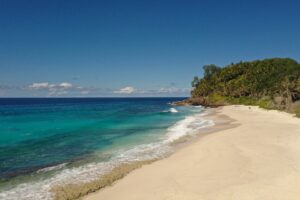
Anse Bazarca
As the SPAs move toward formal adoption later this year, MCSS continues to support the process through monitoring, training, and adaptive management. The organisation’s long‑term vision is clear: thriving turtle populations, resilient nesting beaches, and a national model of conservation that blends science, policy, and community action.
Christophe Mason-Parker (Marine Conservation Society Seychelles) – April 2026
Photo credits from MCSS
 Go back