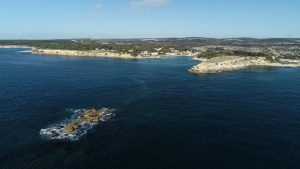
At the 81st United Nations General Assembly, ministers and representatives of the High Ambition Coalition for Nature and People reaffirmed their commitment to protecting and conserving at least 30% of the planet’s land and ocean by 2030 and called for accelerated, inclusive and effective implementation.
30×30 for Nature and People Declaration
Full text
We, the ministers and representatives of the High Ambition Coalition for Nature and People (HAC for N&P), championing the protection and conservation of at least 30% of the planet’s land and ocean by 2030 (30×30), have gathered at the 81st United Nations General Assembly to reaffirm our collective commitment to targets enshrined of the Kunming-Montreal Global Biodiversity Framework, including Target 3.
Recognizing that, according to the World Database on Protected and Conserved Areas (WDCPA), to date, 18.45% of terrestrial and inland waters and 10.03% of marine areas are currently protected, including through other effective conservation measures.
Acknowledging that despite positive progress, urgent and significant additional efforts are required to achieve 30×30.
Recalling the findings of the IPBES assessments Nexus (June 2024), Transformative Change (December 2024), Business and Biodiversity (February 2026) and the World Economic Forum’s Global Risk Report (2026). We stress that biodiversity loss threatens ecosystems, climate, economic stability, food security, sustainable development, global security and human health. Biodiversity conservation is therefore essential to resilient economies, sustainable societies, peace and human wellbeing.
Highlighting that we are now passed the midpoint of the K-M GBF implementation period, we call for renewed political leadership and greater ambition to deliver our collective commitments.
We therefore commit and call on all countries to engage with swift, ambitious, and effective implementation of the 30×30 target, guided by the following principles:
First, we emphasize the need for a whole-of-society and whole-of-government approache ensuring biodiversity policies are coherent across sectors and recognizing nature’s vital contribution to the health, security and resilience of our societies. Protecting nature is therefore not only an environmental imperative, but it also delivers cultural, social, and economic benefits.
Second, the implementation of the target must ensure high-quality and long-term conservation outcomes, including ecological representativeness and connectivity, utilizing strong governance and effective management of protected and conserved areas.
Third, we emphasize the importance of the full, equitable, inclusive and effective participation of Indigenous Peoples and local communities, recognizing indigenous and traditional territories where applicable, and women in the planning, designation, governance, and management of protected and conserved areas, recognizing their rights, knowledge, stewardship, and essential role in biodiversity conservation.
Fourth, we underscore transparency and accountability as core principles. We urge all Parties to submit their National Reports. Furthermore, we call on all countries or regions, as applicable, to regularly report and update their progress in the World Database on Protected and Conserved Areas (WDPCA).
Additionally, successful implementation requires strong national and local ownership, time-bound plans, locally led initiatives, and regional cooperation. We encourage Parties to submit their National Biodiversity Strategies and Action Plans and set clear, measurable national targets in these, aligned with the Framework’s goals and targets, or separately, to strengthen accountability and collective ambition over the next 4 years.
Fifth, we recognize the contribution of area-based management tools, including marine protected areas in areas beyond national jurisdiction to achieving 30×30. We therefore encourage States to ratify the BBNJ Agreement before its first COP and call for the active participation in discussion of area-based management tools, including marine protected areas, under the BBNJ Agreement.
Sixth, we acknowledge the significant financing gap for effective 30×30 implementation and management, estimated between $103 to $178 billion per year, according to Protecting 30% of the Planet for Nature: Economic Analysis — Campaign For Nature (2020); including an international finance gap of $4–6 billion per year, according to the latest report State of international 30×30 funding (2025). Closing this total financing gap will require resources from all sources including increased domestic resources, blended finance, and mobilization of public, philanthropic and private funding, with adequate, accessible and timely financing, including for developing countries.
Through the High Ambition Coalition for Nature and People, we underscore the importance of sustained high-level political momentum on biodiversity conservation. We encourage governments and stakeholders to bring new commitments, concrete actions and time-bound measures to CBD COP17 to reinforce ambition and accelerate implementation, and call upon all, including private sectors and financial institutions to strengthen their support.
We also call for the first 30×30 Global Summit to assess progress and renew ambition, in 30×30 implementation. We reaffirm our determination to work with all partners to accelerate urgent, inclusive and effective implementation of the Framework, including 30×30 for present and future generations.